This is an aimless blog that gives voices to small joys, quirky happenstances, everyday occurrences, and occasional pesterings as the author navigates her life paths as an educator, transplanted Wyomingite, traveler, and curiosity seeker.
Screeching around our home, the cicadas that come with the onset of the rainy season sound like an army of broken hard drives droning in free space. They can reach up to 120 decibels and can be heard in the heat of the day right before a storm. Their chorus is an extraordinary buzz.
Funny true life story about this part of our Brasília life. Two years ago, two friends were visiting from Alaska and Washington, D.C. when we heard a loud sound in the house. Uli was out of the house somewhere, and the sound seemed to be coming from his office. It sounded like the death of a computer, and I immediately thought that there must be some sort of hardware melting down. Our friends and I rushed into his office to intervene and search for the origin of the noise. We looked and looked and eventually found a two-inch bug happily clinging to the screen window while emitting this broken computer sound. After having a good laugh, our friends made a recording and we started to hear cicadas everywhere.
Now, when the cicadas really get noisy, I cannot help but thinking of flying broken hard drives.
Not long after I posted. Less that 24 hours after I posted.
It rained.
For four glorious days, the parched earth and dust gave way to sweet droplets of rain. The fragrance. The decadence.
On Monday, I had to drop something off at work quickly. When I exited the building, there were clouds rumbling. By the time I reached our apartment, the sky was sputtering. I arrived to run raggedly through the house shouting to my husband about the rain when everything opened and it poured.
Really there is nothing sweeter. Nothing more refreshing. More nourishing.
We haven't had a tiny drip drop of rain in 117 days, I read this morning. With temperatures near 35 Celsius/95 Fahrenheit and relative humidity around 15% Brasília is parched. Not yet record-breaking, 2020 is currently in 8th position in historical records for the length of the dry season with predictions that it could maybe rain just a little bit on the 22nd. There is a fine dust layered everywhere on everything. It makes you feel lethargic and a bit slow. This is a normal part of the seasonal changes here, and it really isn't hotter or drier than some of the arid prairie in Wyoming or deserts of Arizona where I have spent time. However, as my skin becomes flaky and cracked and I constantly gulp down liters of water, I have to admit that a bit of rain would be nice.
A friend and proud Brasíliense Nicolas Behr published a bilingual collection of poems worth a read if you'd like to understand our home town. Here's a .pdf in an online version: It Will Never Rain Again.
Until it rains, I think I will just settle into some poetry, brew a cup of strong, Brazilian coffee, and put some music on in the background from a place where it surely must be raining.
The bored girl Alice could not resist temptation nor the adventures that awaited. It has been a while since I read Lewis Caroll, but I do remember the nonsense that awaited Alice in Wonderland. The story that unfolds after she follows the white rabbit is whimsical and dangerous at the same time. My college lit class studied the book's symbols and Victorian references at length, but I still think the appeal of the story is its oddity and adventure. What if there were such a universe down a rabbit hole or through the looking glass? Would you go down the rabbit hole?
We started listening to a podcast called Rabbit Hole about what the internet is doing to us. Based on the YouTube radicalization of a twenty-something in West Virginia, the investigation looks at YouTube and its algorithms and how they shape thought. The content is well-researched and thoughtful, tracing how this young man oscillates from conspiracy theories and truths on all sides of the political spectrum. It is well worth a listen, especially with such a powerful platform like YouTube at the center of the discussion and knowing that its reach is unimaginable and global (see this article about Brazil). About half way through the series, I can draw parallels with which stories are and which stories are not coughed up on my Twitter, Google, or Facebook feeds. It is alarming, particularly so when we seem so ready to take what we see and hear at face value.
I want to think about this. How did we get here?
Are we not teaching and practicing enough critical thinking? Not only our "children" but also our adults do not seem to have the media literacy to validate sources and fact check information. When our "feeds" give us like-minded and like-sourced material, it can pull us down a tunnel of misinformation in which every publication swirls together into a loop of the same lies or truths. Would we recognize real facts if they came from another source? Do we have enough practice at dissonance and adequate exposure to multiple sides of an argument? Can we teach ourselves to get out of the rabbit hole? Can we resist the temptation of an incendiary and righteous trip down the rabbit hole in the first place?
What responsibility do big tech companies have in all of this? Have they built such perfect artificial intelligence that feeds into our vulnerabilities as humans that we do not have the will to escape? Where is personal responsibility in all of this? And, if big tech has some responsibility, how shall they enact it? Flagging or removing content is a form of censorship. What power to decide what can and cannot be seen... should this be in the hands of a company who wants you to watch and who depends on your views to generate income? should this power be in the hands of government who might easily manipulate the masses?
Can we escape our polarization - socially and politically - to come together over anything? Can we agree that some ideas and symbols are simply hateful and should be stopped altogether? We are so encamped in our positions that I have doubts that we can recognize the Mad Hatter or the Queen of Hearts... let alone the emperor without clothes!
Is this a new problem? I suspect it is a different problem. Not that talking heads, tabloids, or idle gossip did not spread its fair share of misinformation, but this is so much more instant and so much more available than ever before. Why wouldn't you believe an authoritative voice on YouTube or a Facebook post that your neighbor shared? At what time in history did we have so much information at our fingertips? How do we sit through the tea party and sort through surprising fact and absurd fiction? When did high quality journalism become something to attach? When did our media become entertainment relying on clicks and likes? What it always this way? Is there any source that we all collectively can trust with the facts? If not, truth seeking is a rather weary journey.
See? There are a lot of serious questions. As for me, I'll be on the look out for that pesky white rabbit.
Two summers in college I worked as a camp counselor in the Black Hills at Outlaw Ranch (OR). It was an impressionable time and one in which I was susceptible to bouts of reflection and philosophizing. It was a Christian camp, and I was surrounded by other truth seekers and in really good company. We spent the summer creating community by hiking at sunrise, singing silly songs, worshiping by the fireside, canoeing across the lake, and mucking bathrooms, cabins, and the kitchen. The summer at OR was divided into two distinct types of camps: youth camp for different ages and family camp. Personally, I had never experienced family camp, but we had speakers and musicians and families who came for a week at a time. As counselors, this meant that we adopted families of all ages and led activities for kids in the morning and families in the afternoon. The guest speakers often were thoughtful professor types or authors or thinkers from the greater South Dakota region. The musicians created music connected to their faith journeys and the area. For me, the time with peers, families, thinkers, music, and nature was a perfect input for a bit of wondering and questioning.
One of the summers I was there, the other counselors and I spent a lot of energy questioning what we knew to be true about our faith and the world. We received a guest speaker one week who shared a life journey in which he lost and found his faith; he was a relentless questioner. I liked this but it was new for me to be exposed to Christians who were willing to ask deliberate, tough, earth-shattering questions about religion, the bible, and Jesus. It felt refreshing and a bit dangerous. Even now, I remember a distinct conversation about reconciling doubt and questions with faith. Our guest shared his view that the best faith arises from uncomfortable questions. In fact, he went further to say that his faith was kept active and alive by questioning and coming back for more conversation. Describing his journey as one in which he always emerged with a pocketful of questions but has determined to keep moving forward, propelled by his faith, he was a good model for how I felt at that time. It is a phrase that I have tucked away for over twenty years and keep circling back to. I do have questions.
That was a long narrative to say that I have found my voice and have
begun to write. The pandemic has given me space to question, and I have a
lot of questions right now that I would like to explore. After a
meandering walk through my neighborhood, I am confronted with the
inexplicable end to a paved path before meeting another. Even those who
constructed the path must have wondered as they painted a large question
mark at the end. Did they run out of asphalt? Was there no plan to
continue further than a certain number of meters? Was the plan altered
after or before this bike path was built? What was going on here where
the sidewalk ends after several kilometers? There are interrupted sidewalks like this all over Brasília. Why? I guess I will have to keep asking and to be comfortable with a pocketful of questions.
It's the nation's biggest holiday with glitter, wigs, samba, and silly costumes almost everywhere, even in Brasilia. We went out to meet our Portuguese tutor at a local cafe on Saturday morning and the spirit was already moving the block in a neighborhood celebration (yes, at 11 a.m.!). With a spirit of anything goes and everyone belongs, I was already tapping my toes and looking for that long-lost glitter...
The human mind is a miraculously curious organ, isn't it? Every single day on my drive to or from work I follow blindly the GPS through "Avenida das Jaqueiras." Severely mispronounced by a computer-automated English speaker, the street is part of my neighborhood. I can locate it and successfully navigate its dangerous roundabouts and even get gas or a car wash nearby. Without blinking, I know this street. What never occurred to me was to investigate the meaning of "jaqueiras." So much for curiosity.
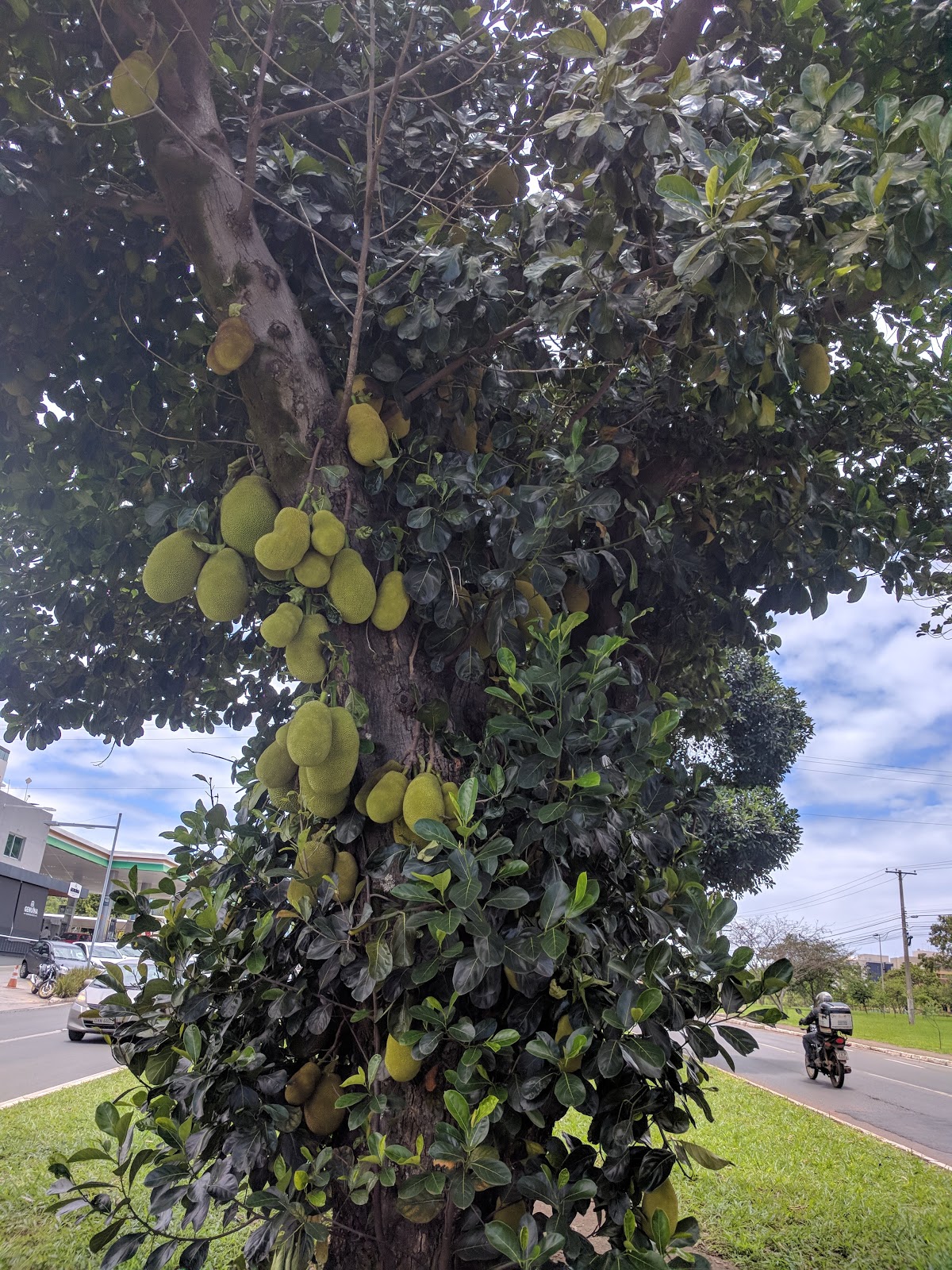
Last weekend, we were out with a friend and turned onto the famed "Avenida das Jaqueiras" when I noticed large fruits protruding from the trees along the route. Every tree had tons of spiky, enormous jack fruit protruding from its branches. Suspicious that every tree on the road seemed to be producing jack fruit. I said as much to our Brazilian friend, who replied, "of course, that is why it is called Jack Fruit Avenue."
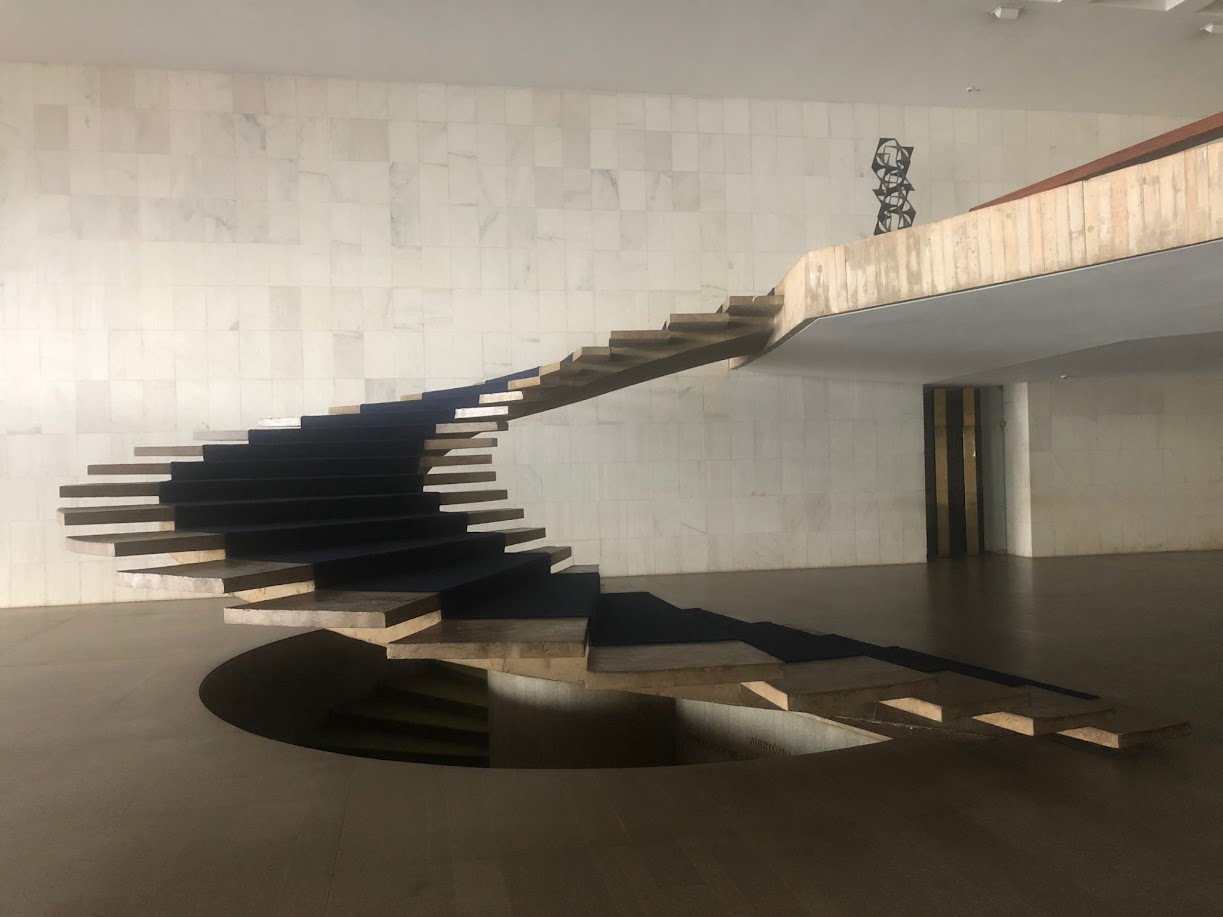
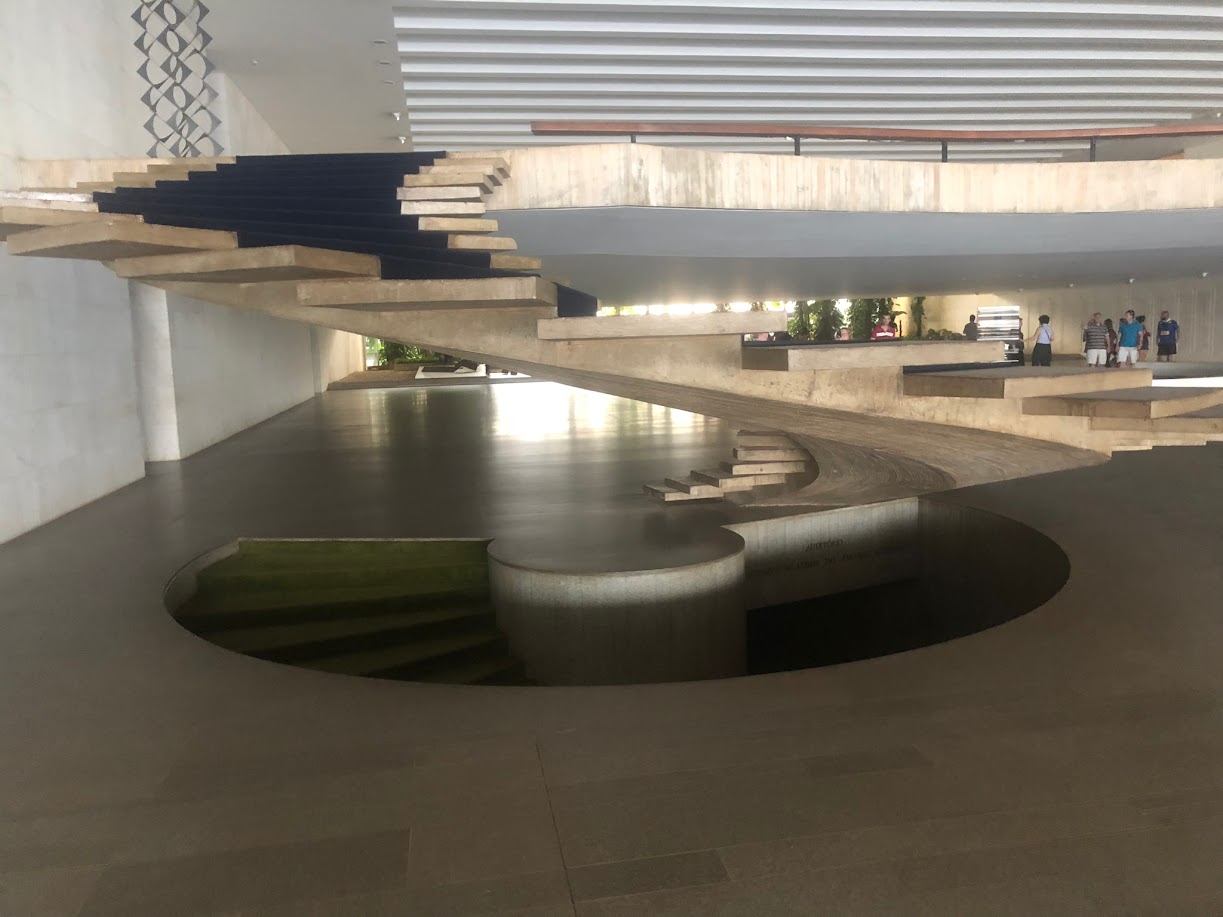
One of the most beautiful and iconic Oscar Niemeyer buildings in Brasília is Itamaraty where the representational space of the Ministry of International Affairs is located. Of course, there are the hidden mazes of bureaucratic spaces, but this is a majestic face Brazil puts on for the world.
Some of our good friends made their way down to visit from DC and Alaska, so we took the opportunity to play tourist in Brasília. It was fun to see our new home through their eyes and to have the time to talk and hang out together. Here are some of the highlights of a guided city tour of Brasilia.
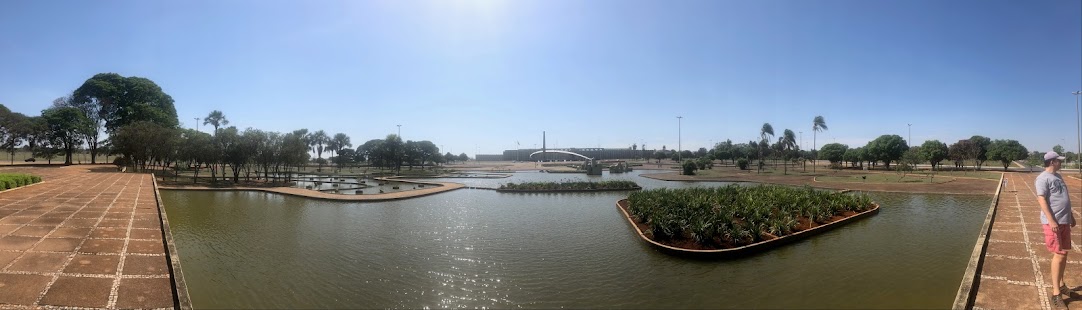
Crystal Square is a beautiful park designed by Burle Marx in the middle of a Brazilian military establishment
Memorial to Juscelino Kubitschek the visionary president that envisioned and built Brasilia as the capital in 1960
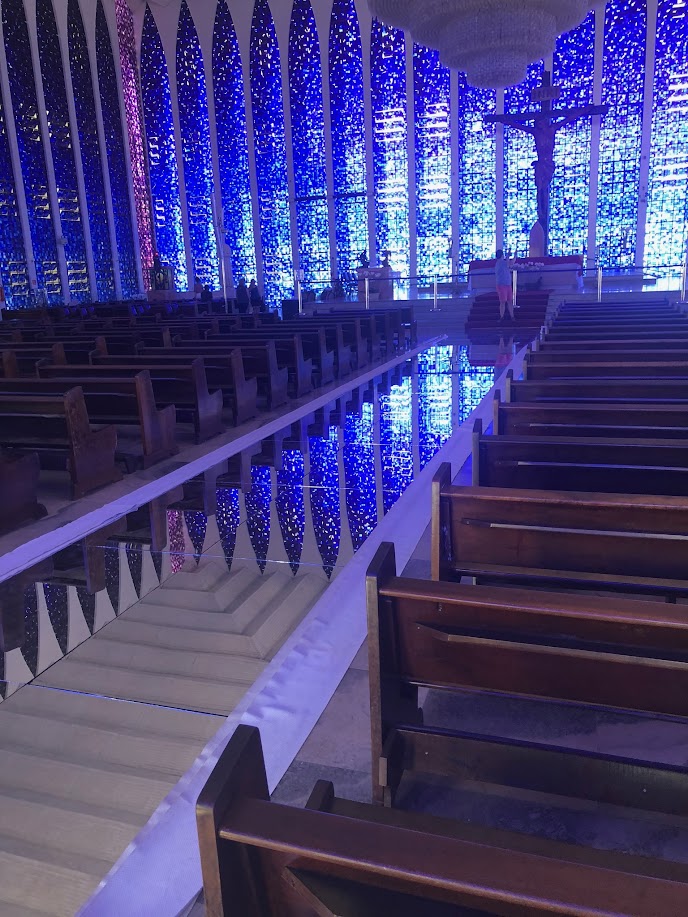
Inside Santuário Dom Bosco
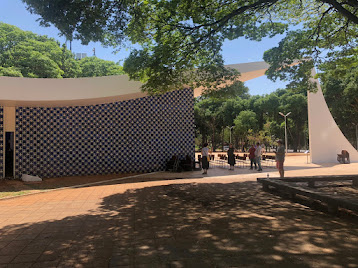
A small church in the perfect Superquadra (concept designed by cityplanner Lúcio Costa) with gorgeous, iconic tilework from Athos Bulcão
The city plan
Tucked into the South Wing is the "perfect" superquadra with a gorgeous park and pond designed by landscaper Burle Marx
Ducking under a tree for some shade with our friends
The plaza of the three powers
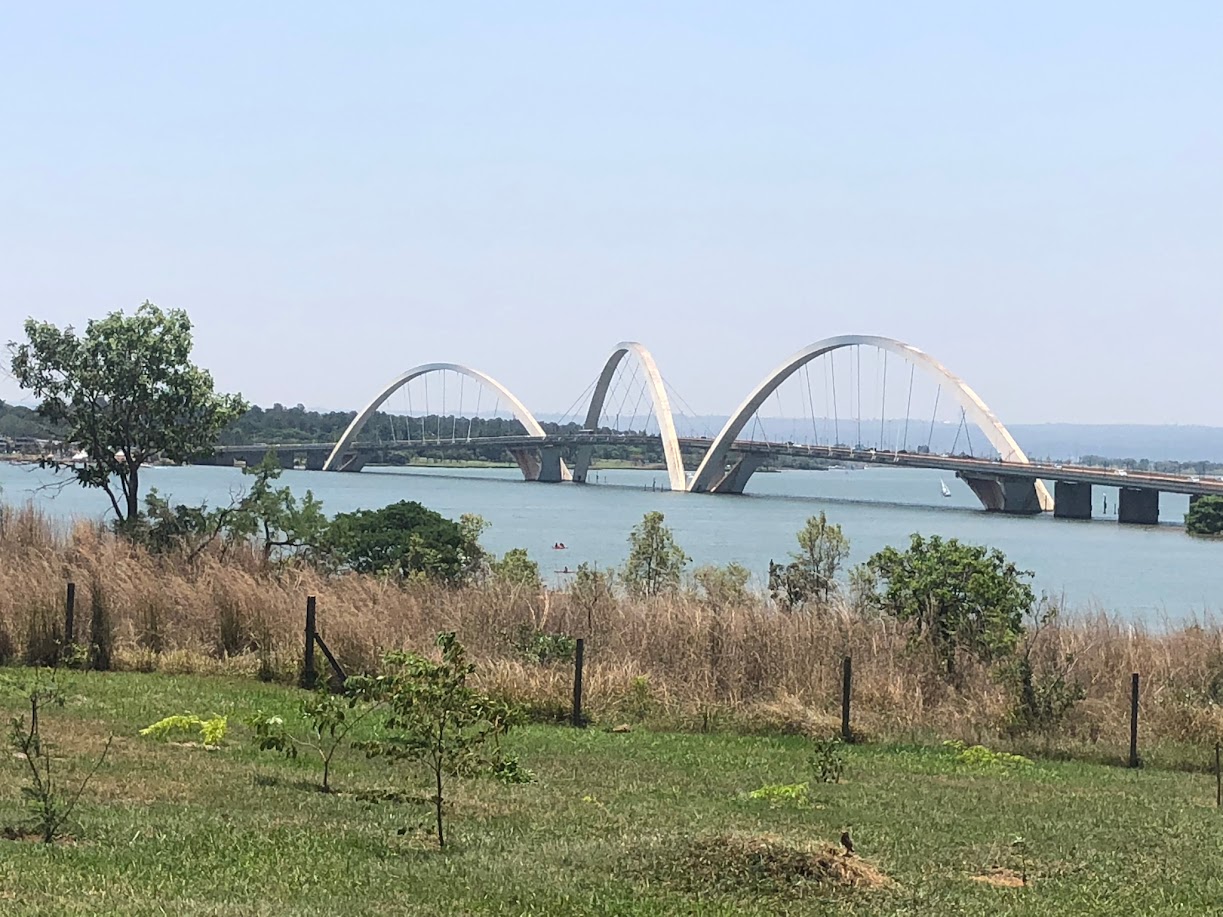
The Kubitchek bridge connecting to the South Lake area
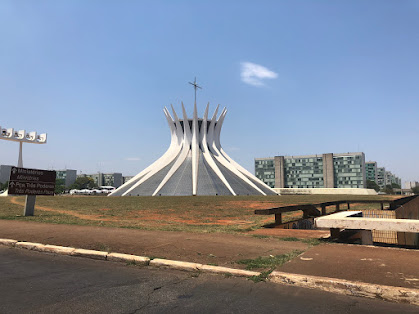
The Catehdral of Brasilia designed by Oscar Niemeyer
Brasilia was built for around 500,000 inhabitants (never mind that there are close to 3 million in the metropolitan area now) and, in the 1960s, was a city of the future. That is to say, a city built with the car in mind. Visionary planners plotted out a city with virtually no stop lights or left turns. Instead, there are looped-de-loops galore with cloverleafs that foil new drivers to the city. Struggling to figure out which lane I need to be transitioning to and when to turn to get turned in the right direction, I am regularly sighted twisting through intersections. On my first trip to work, I impressively missed my exit and looped through an intersection six times before getting set in the right direction. The challenges of a newcomer navigating this city can be well understood.
This weekend we made cake for a small-ish housewarming at our new apartment in Brasília. Here are the beautiful and delicious outcomes of our two-day baking efforts.
Brioche, butter cake, beetroot cake, banana bread, brownies, apple cake with cream... the party was as good as the cakes!
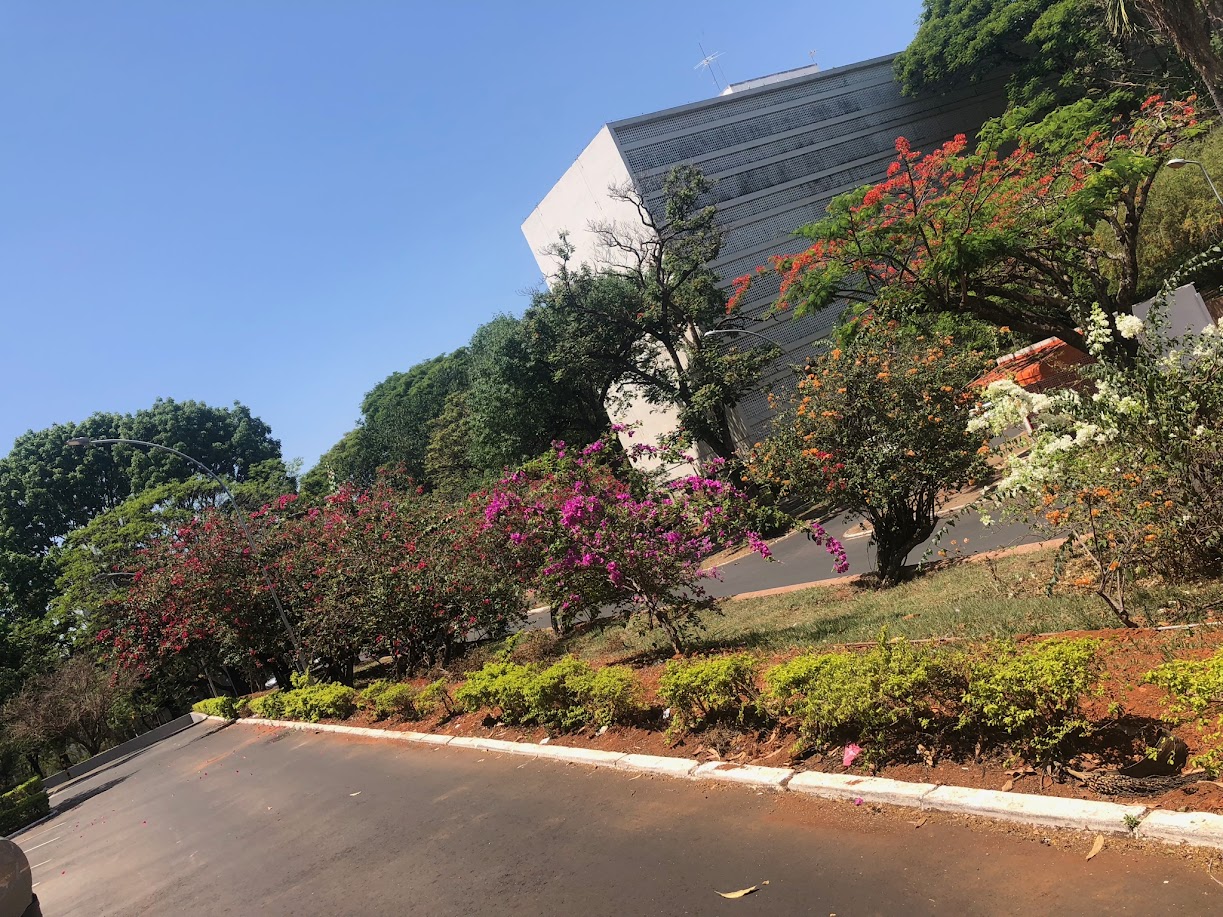
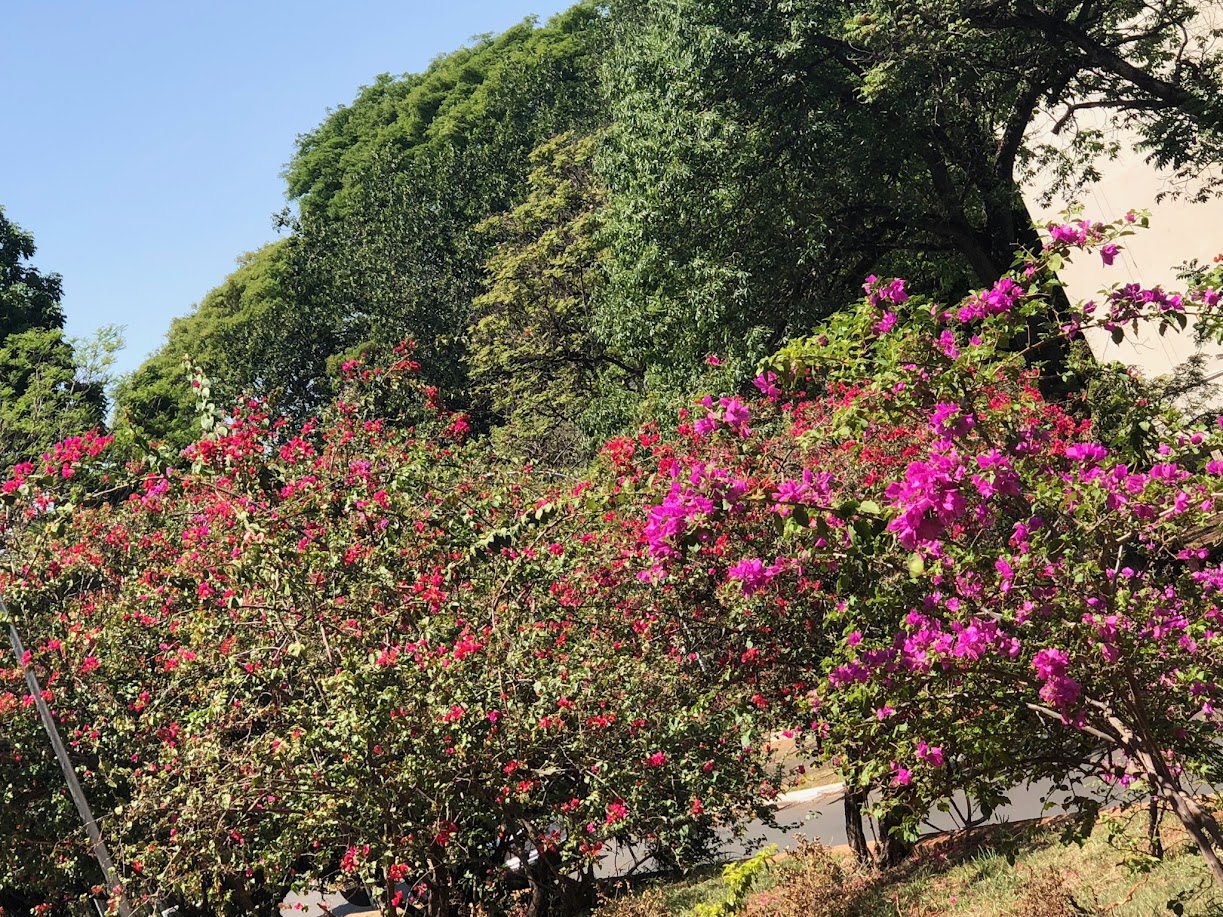
The Ipê is a type of tree native to this area of Brazil and when it flowers, there is an explosion of brightly colored blossoms. There are few around my building that pop out at you and then are suddenly blown from the branch to the ground, leaving behind tie-dyed streaks of color on the red soil at their base. It's stunning (although my photography might not be...).
I am abandoning my 100 days posts... not because I want to disappear but rather because life here is becoming just that: life. We are settling into a routine and feeling more like we belong, bit by bit, to this place. It isn't that there are not interesting occurrences or strange happenings in our day-to-day experiences here in Brazil, but they feel less jolting and more like the kind of stand-out things you can appreciate if you are paying attention most anywhere. The best sign of our being in this stage of moving to a new place is my recent adaptation of my commute. I am back in the saddle and happily biking 9 kilometers to work each morning through the park. I feel like I am part of the fabric of the city. I have a baseline routine from which I can vary, and the comfort of doing a familiar thing (riding my bike to work) in a new place feels very very good.
Whoopi-ty-aye-oh Rockin` to and fro back in the saddle again Whoopi-ty-aye-yay I go my way Back in the saddle again
Brasília's City Park is near our home and consists of 420 hectares set aside for barbecuing, cycling, running, and amusement. It is reputably one of the largest public parks in all of Latin America. If you compare it with New York's Central Park (320 hectares), it is remarkably bigger. There is a stage for concerts and an artificial lake as well as an amusement park. The architecture, landscaping, and art are by some of the founding fathers of Brasília -- Lucia Costa, Oscar Neimeyer, and Burle Marx. My favorite Brasília-esque detail? The iconic tiles on the bathrooms, below, by the well-known Athos Bulcão.
Today, I made the trek back to Brasília, and I am honestly grateful to be back home. Funny how after only 6 weeks that a place can have that feeling at home. Even though our apartment still void of our furnishings and artifacts can feel a bit sterile, it is our new center of gravity. My own bed and pillow, food from my own kitchen, the silence of reading a book in my own living room, and the comfort of being in the company of my partner in life. Ah, home. There really is no place like it.
A Taiwanese friend sent me this screenshot this morning, and I thought maybe I would begin my postings about Brazil here at home in Brasilia. The first book I read about our new home was focused on Brasilia as well (The Capital of Hope) and its creation story as a man-made city, UNESCO world heritage site, and the social, political, and economic realities of birthing a capital in Brazil in the 1960s. If you are curious, it is worth a read. However, here are some of the highlights with some of my commentary:
The city is located inland in the highlands (approximately 4,000 feet above sea level) with two distinct seasons: dry and wet. The climate is phenomenal right now with dry, sunny days in the 70s and low 80s and nighttime temperatures dipping into the 50s. We do not need to use air conditioning and leave our windows wide open night and day.
The location was chosen to provide equal access to the entire country rather than concentrating power, wealth, and business on the coastal ports and cities of Rio and São Paulo. There was literally nothing here other than dust when President Kubitschek moved the capital from Rio in 1956.
The city was mostly built during President Kubitschek's term from 1956-1961 as he fulfilled a campaign promise. The city was built in 41 months and people moved here from all over Brazil to find jobs, many of these pioneers came from the impoverished northeastern states.
There is fantastical architecture and landscaping that interrupts the wide skies by famous city planner Lúcio Costa, architect Oscar Neiemeyer, and landscaper Robert Burle Marx. The modernist style includes all kinds of funky-shaped buildings that were meant to illustrate the futuristic city's promise.
Brasilia is planned in the shape of an airplane with the wings serving as the axis of the city. Everything is very organized into blocks and sectors with certain areas set aside for certain kinds of services, shops, or activities. All of the embassies are located together in one sector, for example.
The physical area of the city is much bigger than pictures make it out to be. Getting around the city requires a car and distances from one area to another are longer than they look on a map. Roads were designed without stoplights to keep traffic flowing and there are no left turns in the city, so you are often looping around and back and through cloverleafs to get to your destination, especially if you are trying to move east-west across the airplane rather than up and down the wings.
Brasilia was built for a population of around 500,000 but there are currently almost 3 million inhabitants here.
As the seat of government, Brasilia is synonymous with the government. This lends to its difficult reputation within the country, much like Washington in the United States. Many Brazilians still do not consider it a real city with its own character.